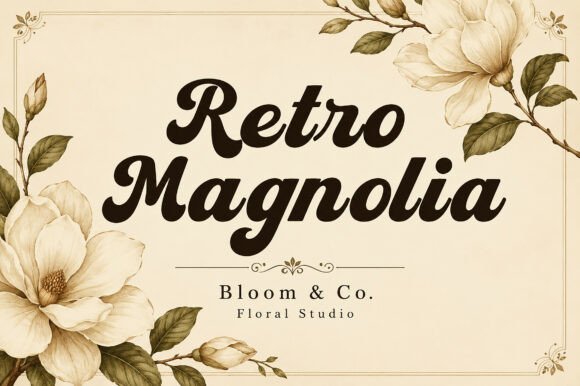
Retro Magnolia: A Vintage Script Font for Crafters
There is something about a font that feels like it already has a story. Before you even type a letter, it carries a mood. Retro Magnolia delivers that mood in spades. It is a classic script font with a personality that sits somewhere between a faded 1950s bakery sign and the elegant lettering on your grandmother’s wedding invitation. It has a graceful vintage charm, but it isn’t fragile. The bold retro vibe gives it real presence. For a maker, that balance is gold. You want a typeface that looks carefully chosen, that makes people pause and smile, and that holds up on everything from a tiny sticker to a large welcome board.
This is the kind of font that makes your products feel more intentional. When you use Retro Magnolia on a physical item, it doesn’t just add words. It adds texture, warmth, and a sense of nostalgia that feels both personal and polished. As a handmade seller, that is exactly what you need to stand out in a crowded market.
The Visual Heart of Retro Magnolia
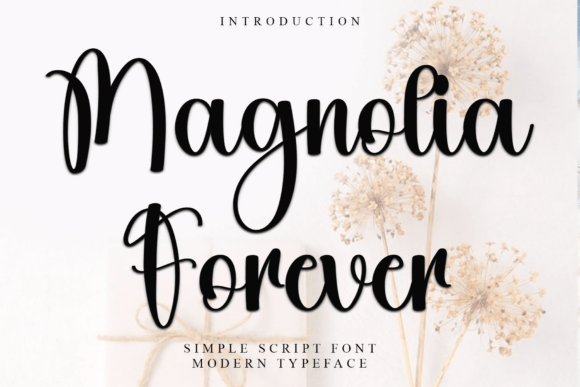
Retro Magnolia is a script font, but it leans away from the overly delicate or wispy styles that can get lost on product labels. Its strokes are confident, with a weight that reads clearly even at smaller sizes. The curves are generous and fluid, while the letterforms maintain a structured consistency that makes it feel like a professional typeface, not a quickly sketched note. There is a distinct vintage flair, but it avoids the cliché of being too distressed or grungy. It is impossibly elegant, as the description says, but it also feels approachable. That pairing of elegance and warmth is rare.
When you look at the letterforms closely, you notice the subtle tails and soft connections. The characters have a rhythmic flow that mimics natural hand lettering without sacrificing readability. This makes it an excellent choice for short phrases, names, titles, and decorative wording. It works beautifully as a display font, and while it can handle a complete sentence or two, its true magic happens when it gets to be the hero of the design.
Where This Font Transforms Handmade Products
If you create products that depend on an emotional connection, Retro Magnolia quickly becomes a design staple. The script’s personality lifts the perceived value of almost anything you make. Think about the way a buyer picks up a candle. First, they see the jar. Then they read the label. A label set in a generic typeface feels forgettable. A label that uses Retro Magnolia for the scent name like “Vanilla Oak & Honey” suddenly feels like a boutique purchase. The same applies to home fragrance tins, reed diffusers, and wax melts. The font whispers quality and care.
For stationery and paper goods, the possibilities are endless. Greeting cards, birthday invitations, baby shower announcements, and wedding rehearsal dinner details all benefit from the nostalgic yet bold character of this script. It pairs naturally with romantic imagery, but it also holds its own against modern clean lines. A simple “You’re Invited” set in Retro Magnolia immediately sets a tone that feels special and curated.
Printable creators will find this font particularly useful. It retains its charm in digital download wall art, planner pages, and SVG designs for mugs, shirts, and tote bags. When you place a heartfelt quote or a family name on a printable, this script makes it look like a finished piece of art rather than a flat text file. For wedding stationery, it shines on welcome signs, table numbers, and seating charts. The bold retro feel gives it enough weight to be seen from a distance, while the graceful curves keep it romantic and soft.
Product packaging is another area where Retro Magnolia does the heavy lifting. Thank-you tags, hang tags for clothing or accessories, belly bands for soap, and small round stickers for bakery boxes all feel more cohesive and elevated with this font. It creates a consistent brand identity without needing multiple design elements. A few well-chosen words in this script, paired with a simple kraft paper background, often look more expensive than busy graphic designs.
Readability on Small Labels, Stickers, and Cut Files
One of the most common worries with script fonts is whether they stay legible when scaled down. Retro Magnolia manages this better than many decorative scripts. The moderate stroke contrast and slightly condensed forms mean that even on a 1.5-inch sticker, a short word like “belle” or “love” remains clear. For product labels, especially those with tiny ingredient lists, you would never set the full body text in a script. The smart approach is to use this font for the main product name or a decorative phrase, then pair it with a clean sans serif for the smaller details. That way, the label is both readable and emotionally compelling.
When working with cutting machines like Cricut or Silhouette, the font’s connected letters can be a blessing and a challenge. Because Retro Magnolia is a flowing script, you will need to weld the letters together in your design software to get clean cuts. The bold weight helps here. Thin, hairline scripts sometimes tear or fail to weed properly, but the sturdy strokes of this font give you a better chance of a smooth cut on vinyl, cardstock, or iron-on material. Always test a small sample first on your chosen material to adjust blade pressure, but expect fewer issues than with an ultra-light handwriting font.
Font Pairings That Let Retro Magnolia Shine
To get the most out of this script, you need to let it be the star. Pair it with a supporting typeface that doesn’t compete. A clean sans serif font is the safest and most effective partner. Look for something with a neutral or slightly geometric character. A simple all-caps sans serif for subheadings and secondary information creates a modern contrast that makes the vintage script feel even more intentional. This combination works beautifully on wedding invitation suites, where the script handles the couple’s names and the sans serif carries the ceremony details.
If you want a softer, more romantic pairing, consider a light serif font. A delicate serif with high contrast echoes the elegance of the script without overpowering it. For a farmhouse or rustic brand, try pairing Retro Magnolia with a small, spaced-out uppercase serif or a minimalist typewriter-style font. The contrast in eras adds depth and character. When in doubt, stick to one script and one complementary font. Too many decorative typefaces on one product can look chaotic, and Retro Magnolia already brings plenty of personality on its own.
Style, Swashes, and What’s Inside the Font File
When you install Retro Magnolia, take a few minutes to explore any included alternates, ligatures, or swashes. These are the hidden gems that can turn a nice design into something truly custom. Many premium script fonts include a set of beginning and ending swashes, alternate letterforms, and ligatures that prevent awkward letter combinations. Even if you use only a couple of alternates, the effect is a more natural, hand-lettered look. This is especially valuable for product names, logos, or signature phrases that you use repeatedly across your brand.
Check the file formats as well. Typically, you will find OTF and TTF files, and sometimes a web font version. OTF files often contain the extended character set and alternates, so use that version if you have design software that supports it. multilingual support is another feature worth looking into. If the font includes accented characters and additional punctuation, you can confidently use it for international customers or designs that require non-English words. It keeps your product range flexible and professional.
Commercial Licensing and Selling Your Work
For handmade sellers and printable creators, the licensing terms matter as much as the font’s beauty. Always confirm that the font comes with a commercial license that covers your specific use. Most font designers allow you to use their typefaces on physical products you sell, such as printed invitations, apparel, mugs, and tote bags, without any additional fees. However, if you create digital products like SVG cut files, editable templates, or printable designs that include the font files themselves, you need to make sure the license allows for that. Many standard licenses require you to flatten the text or outline the letters before distributing a digital download. Take the time to read the license that comes with Retro Magnolia. If it is a standard desktop license, it will cover most physical product sales but may require an extended license for template resale or mass merchandise production. Using a font the right way protects your business and respects the designer’s work.
Seasonal and Everyday Craft Ideas
Retro Magnolia adapts to the season without losing its charm. In the fall, use it on pumpkin-scented candle labels, Thanksgiving place cards, and “Give Thanks” printable art. The vintage warmth fits right into the earth tones and cozy vibes. In winter, Christmas gift tags, cookie packaging, and holiday party invites feel more personal with this script. A simple “Joy” or “Noel” cut from metallic vinyl and applied to a wooden sign becomes a keepsake. Spring and summer projects like floral market bags, lemonade stand signs, and bridal shower stickers also benefit from the cheerful, retro energy.
Beyond holidays, boutique logos and brand marks take on a distinctive identity with this font. Even if you only use it for your own shop name or a signature tagline, it builds recognition. Customers start to associate that graceful, vintage script with your specific handmade quality. That kind of brand consistency is hard to achieve, but a carefully chosen font moves you closer to it with every product you make.
Retro Magnolia is not just a pretty typeface. It is a design tool that helps you communicate care, craftsmanship, and a little bit of nostalgic magic. It shapes how people feel when they pick up your product, and that feeling is what turns a first-time buyer into a repeat customer.